The vision defect which arises due to gradual weakening of the ciliary muscles and diminishing flexibility of eye lens is:
- (a) Myopia
- (b) Hypermetropia
- (c) Presbyopia
- (d) Myopia and hypermetropia both
High importanceUsually 2 marks a paper · mostly MCQs and short answers · asked in 4 of the last papers
The board questions below are real and complete — they come from the CBSE papers themselves. The written notes for this topic are still being prepared.
4 from the CBSE papers we hold — the exact wording the board used.
The vision defect which arises due to gradual weakening of the ciliary muscles and diminishing flexibility of eye lens is:
An old person is suffering from an eye defect caused by weakening of ciliary muscles and diminishing flexibility of the eye lens. If the defect of vision is 'a' which can be corrected by lens 'b', then 'a' and 'b' respectively are :
Study the diagram given below and answer the questions that follow: [ray diagram of a defective eye with points N and N' shown, rays converging in front of the retina] (i) Name the defect of vision represented in the diagram. Give reason for your answer. (ii) List two causes of this defect. (iii) With the help of a diagram show how this defect of vision is corrected.
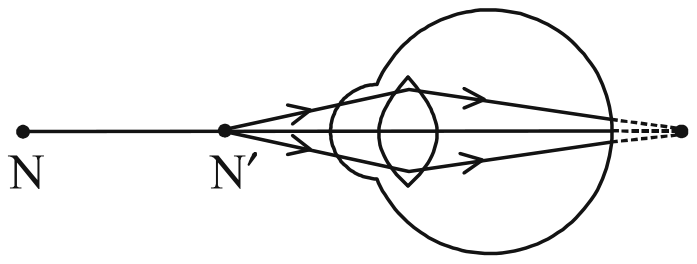
It is observed that the power of an eye to see nearby objects as well as far off objects diminishes with age. (i) Give reason for the above statement. (ii) Name the defect that is likely to arise in the eyes in such a condition. (iii) Draw a labelled ray diagram to show the type of corrective lens used for restoring the vision of such an eye.