If the part 'P' of the flower is removed, which of the following processes will not take place?
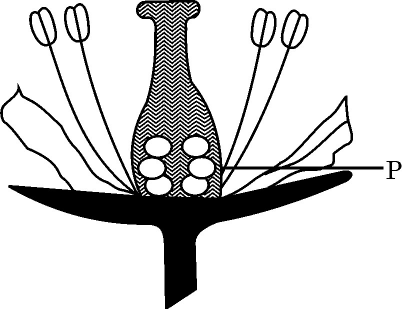
- (a) Formation of pollens
- (b) Formation of flower
- (c) Formation of fruit
- (d) Formation of seed
High importanceUsually 4 marks a paper · mostly long answers and MCQs · asked in 3 of the last papers
The board questions below are real and complete — they come from the CBSE papers themselves. The written notes for this topic are still being prepared.
6 from the CBSE papers we hold — the exact wording the board used.
If the part 'P' of the flower is removed, which of the following processes will not take place?
The correct/true statement(s) for a bisexual flower is/are : (i) They possess both stamen and pistil. (ii) They possess either stamen or pistil. (iii) They exhibit either self-pollination or cross-pollination. (iv) They cannot produce fruits on their own.
(a) What are chromosomes ? (b) Explain in brief how stability of DNA content of a species is ensured in sexually reproducing organisms ?
(i) Differentiate between self-pollination and cross-pollination. (ii) Identify A, B and C in the diagram given below (a diagram of a flower/pistil showing pollen germination and the ovule - see figure) and write one function of each.
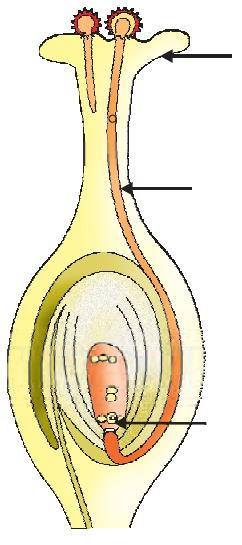
(a) Name the parts of a bisexual flower that are not directly involved in reproduction. (b) Differentiate between self pollination and cross pollination. List any two significance of pollination. (c) What is the fate of ovules and ovary after fertilization in a flower?
(a) Which of the following flowers will have higher possibility of self-pollination? Mustard, Papaya, Watermelon, Hibiscus. (b) List the two reproductive parts of a bisexual flower.