The volume ratio of hydrogen and oxygen gases liberated during electrolysis of water is
- (a) 1 : 1
- (b) 2 : 1
- (c) 4 : 1
- (d) 1 : 2
6 topics · about 3 hours · 7% of the paper · asked in 4 of the last papers
15 questions from the CBSE papers we hold.
The volume ratio of hydrogen and oxygen gases liberated during electrolysis of water is
C_6H_{12}O_6(aq) + 6O_2(g) -> 6CO_2(g) + 6H_2O(l). The above reaction is an example of -
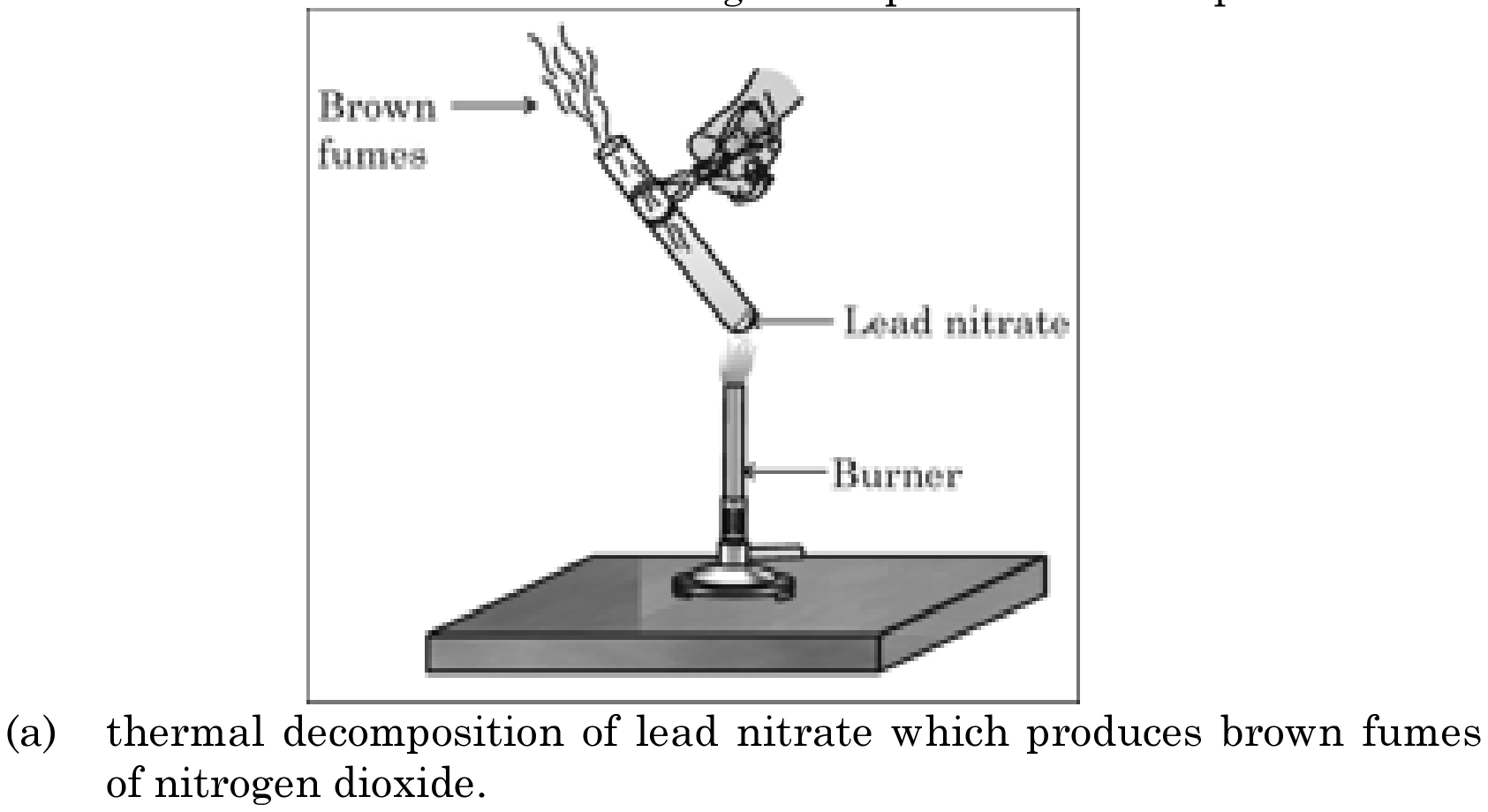
Account for the following: (a) White silver chloride turns grey when exposed to sunlight. (b) Lead (II) nitrate on heating releases brown fumes. (c) Bags of oil and fat containing food items are flushed with nitrogen gas.
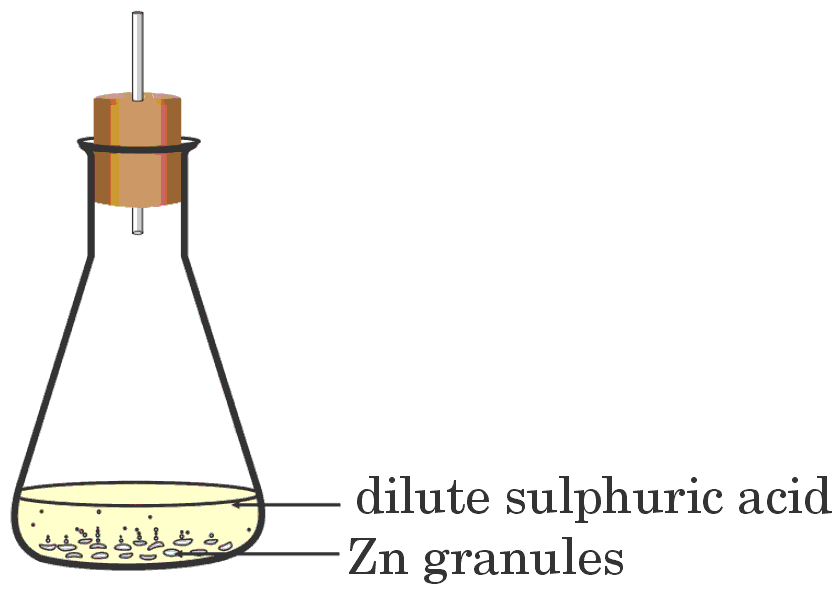
A student performs the following experiment in his school laboratory (a conical flask fitted with a delivery tube containing dilute sulphuric acid and Zn granules - see figure). List two observations to justify that in this experiment a chemical change has taken place.
Electrolysis of water is a decomposition reaction. The mass ratio (M_H : M_O) of hydrogen and oxygen gases liberated at the electrodes during electrolysis of water is :
Assertion (A): Decomposition reactions are generally endothermic reactions. Reason (R): Decomposition of organic matter into compost is an exothermic process. Select the correct answer:
When 2 mL of sodium hydroxide solution is added to few pieces of granulated zinc in a test tube and then warmed, the reaction that occurs can be written in the form of a balanced chemical equation as:
Select from the following a decomposition reaction in which source of energy for decomposition is light:
Name the type of chemical reaction in which calcium oxide reacts with water. Justify your answer by giving balanced chemical equation for the chemical reaction.
Write one chemical equation each for the chemical reaction in which the following have taken place: (i) Change in colour (ii) Change in temperature (iii) Formation of precipitate. Mention colour change/temperature change (rise/fall)/compound precipitated along with equation.
MnO_2 + 4HCl -> MnCl_2 + 2H_2O + Cl_2. The reaction given above is a redox reaction because in this case:
Write balanced chemical equation for the reaction that occurs when: (i) blue coloured copper sulphate crystals are heated and (ii) Sodium hydrogen carbonate is heated during cooking.
MnO_2 + x HCl -> MnCl_2 + y H_2O + z Cl_2. In order to balance the above chemical equation, the values of x, y and z respectively are:
The emission of brown fumes in the given experimental set-up is due to
(a) Identify the reducing agent in the following reactions: (i) 4NH_3 + 5O_2 -> 4NO + 6H_2O (ii) H_2O + F_2 -> HF + HOF (iii) Fe_2O_3 + 3CO -> 2Fe + 3CO_2 (iv) 2H_2 + O_2 -> 2H_2O. (b) Define a redox reaction in terms of gain or loss of oxygen.